Tech
Hardware
Sonic Bike V.4 (aka Sensor Bike)
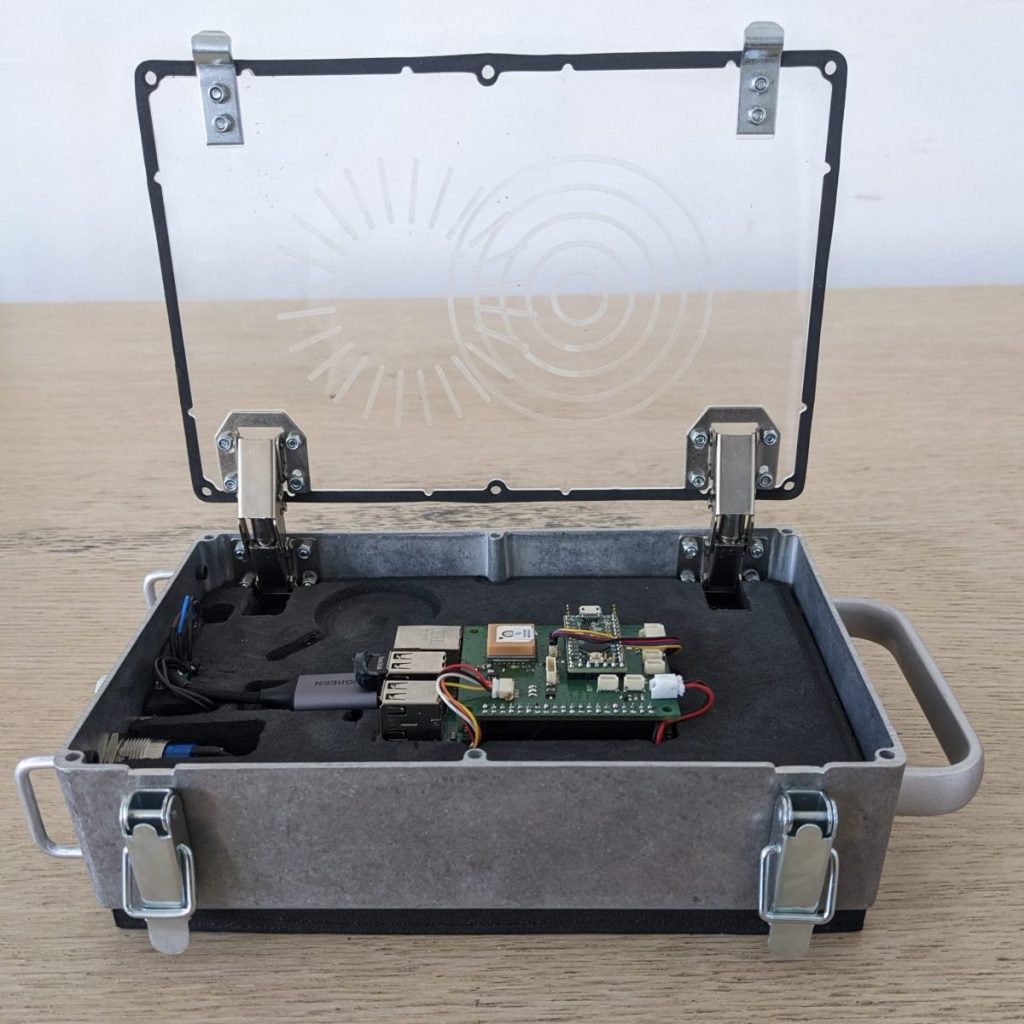
Sensory Bike was completed during Kaffe’s professorship at TU Berlin, 2016. We have stayed with the Raspberry Pi2 as well as the GPS receiver and audio system. New additions are a range of sensors that allow for more immediate sound control. A so-called “Sensor Hat” sits on top of the RPi2 and houses an IMU that provides pitch, roll & yaw signals, i.e. heading and tilt. The raw accelerometer and gyroscope data is available too, e.g. In addition there’s environmental sensors (temperature, air pressure, humidity) and an LED matrix. The sensors are connected thru an I2C interface which is queried by Python scripts.
Also planned are a number of outboard sensors that connect to an additional microcontroller that forwards data thru a UART (serial) link. Currently this is a Teensy board to which we have connected a cadence sensor based on biased hall effect elements that are pointed at the sprockets of the chain rings. More to follow…
Something where a redesign is currently being considered are the batteries, see below.
Sonic Bike V.3 (current)
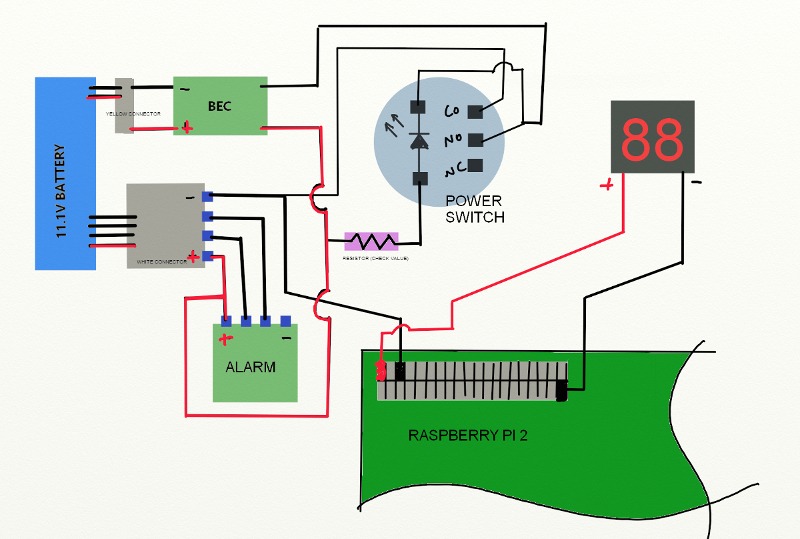
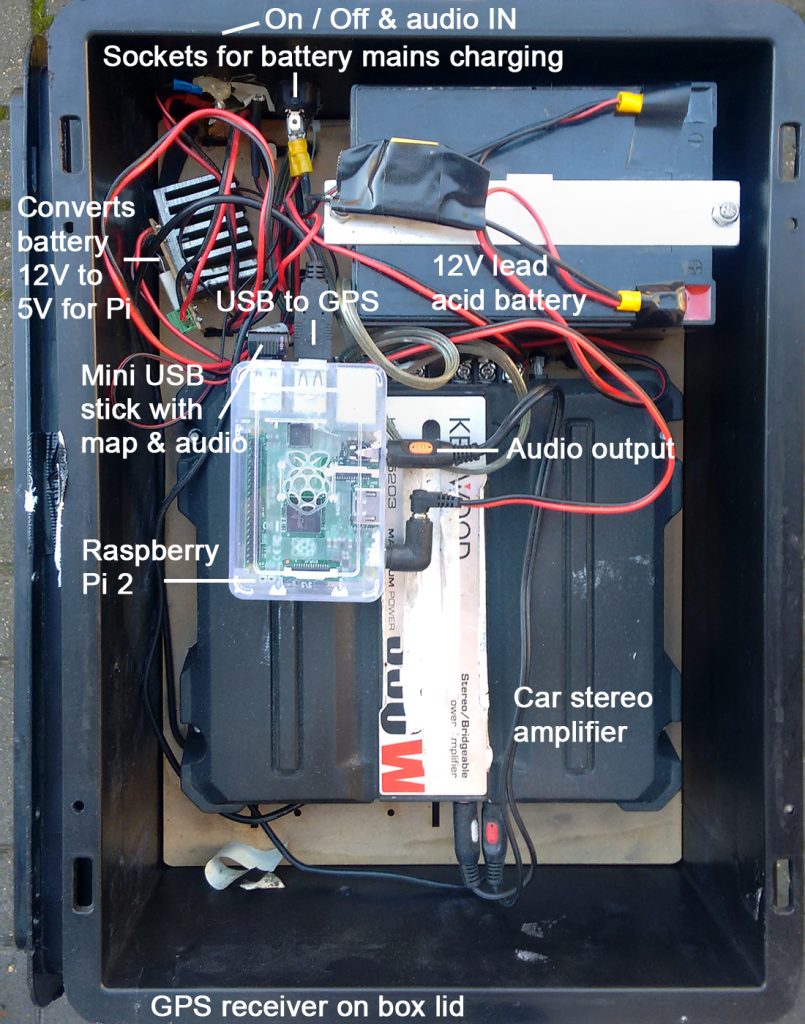
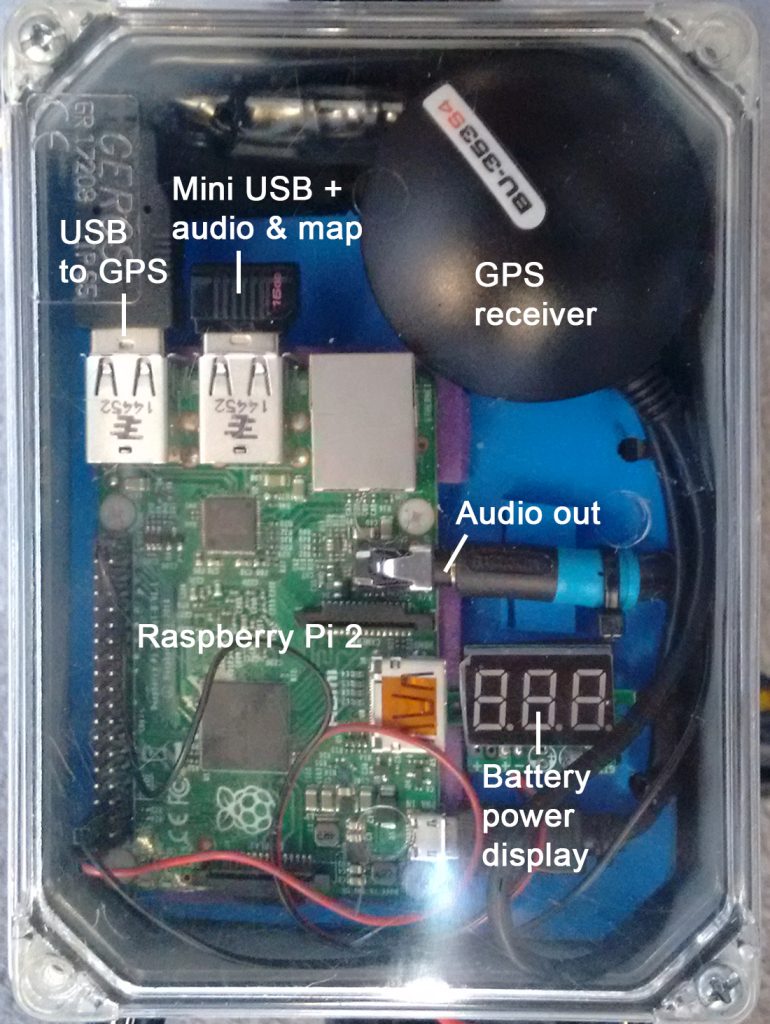
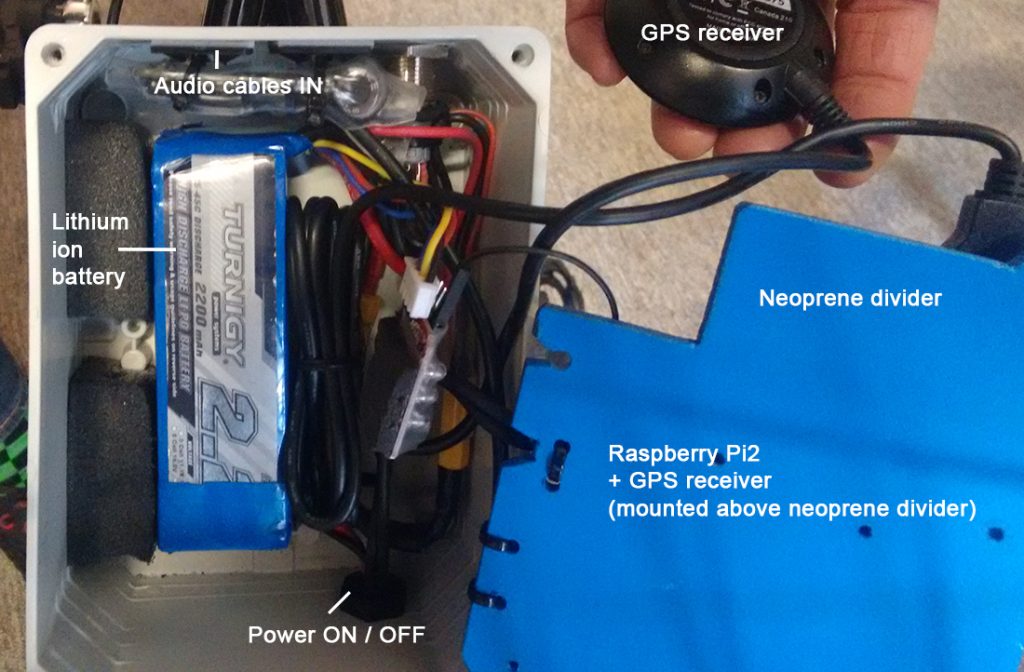
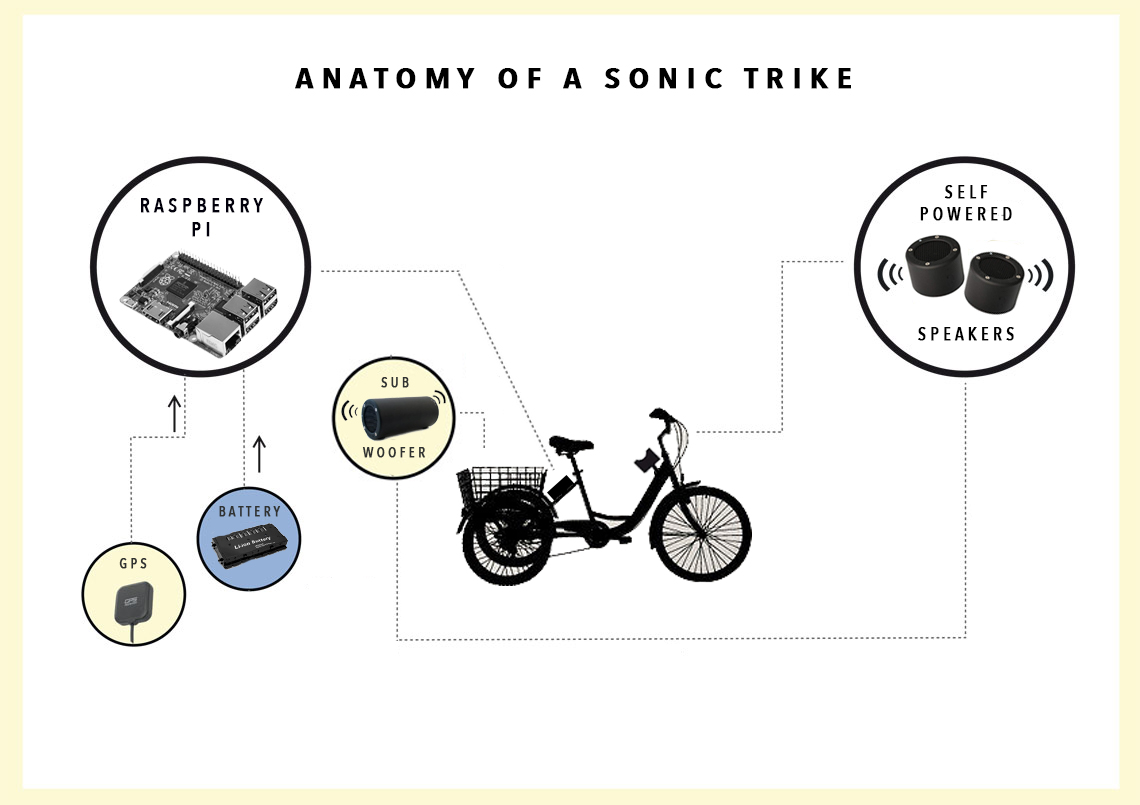
The sonic bikes currently run on a Raspberry Pi2 with a G-STAR IV GPS receiver attached via USB, audio performing through a turtle beach USB dongle to two minirig self-powered speakers + sub. The kit is powered by a LiPo battery(11.1V, 2.2A) transformed to 5V for the Pi. Everything is stored in an IP67 waterproof box, (L150mm x W110mm x D75mm) secured on the bikes frame or rear mounted bike rack. Note the battery voltage digital counter + alarm connected so that user knows voltage output from battery. is 5V and Pi also connected.
Sonic Bike V.2
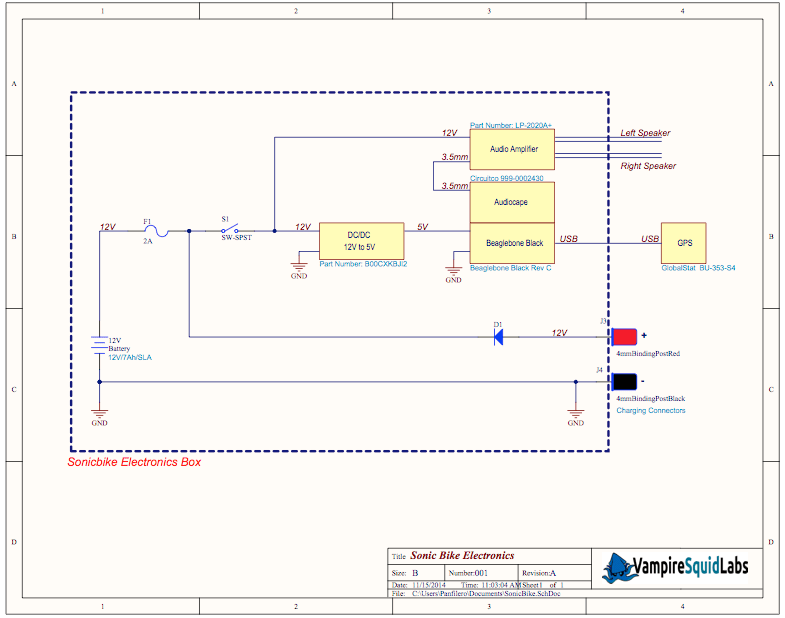
1 x Beaglebone Black Rev C with an audio cape (Circuitco 999-0002430)used on second hand bikes. The Beagleboard, used on the v.1 12 yellow bikes(2012) and sonic bikes-Finland, are no longer available.
Sonic Bike V.1
1 x Beagleboard, requires 5V power. We have made and bought different converters to drop the 12V battery to 5V/3A. Reliable convertors used = SMAKN DC/DC Converter 12V Step Down to 5V/3A Power Supply Module Chuangruifa Car Power Converter – DC/DC 12V to 5V/3A Car LED Display. See part no. in circuit diagram below.
Android phones
These are useful for experimentation and prototyping, if not production use, as they contain lots of sensors, an existing sound system and easily accessible OSC control and wifi support.
GPS receivers(USB)
V2 & V3 (current): GlobalStat BU-353-S4 receiver, 1 per bike.
V1 : WGM-302U, 1 per bike.
Battery
Note: use a short and/or high quality USB cable when powering from a battery
V4: a number of options are currently under consideration.
The problem with the 11.1V LiPo is that it requires a balancer for proper charging. This could be solved by a multi-pin socket plus matching adapter cable towards the outboard charger. Another approach could be to charge unbalanced during events, but take the battery outside the case and charge it properly afterwards when there is more time.
The alternative is to use a (single-cell) 3.7V LiPo where no balancing is required. While the 11.1V LiPo requires a step-down converter, the 3.7V needs a step-up converter, e.g. the Adafruit PowerBoost. This particular board also includes a low battery detector which is useful to prevent the batteries from a deep discharge.
Another option are easily available USB “power banks”. No step-up/down converters required. Some examples: 2600mAh, 8000mAh, 9600mAh. Only problem with these is that they charge slow. However, if you pick one with a large enough capacity one can power the RPi for a whole day and recharge overnight.
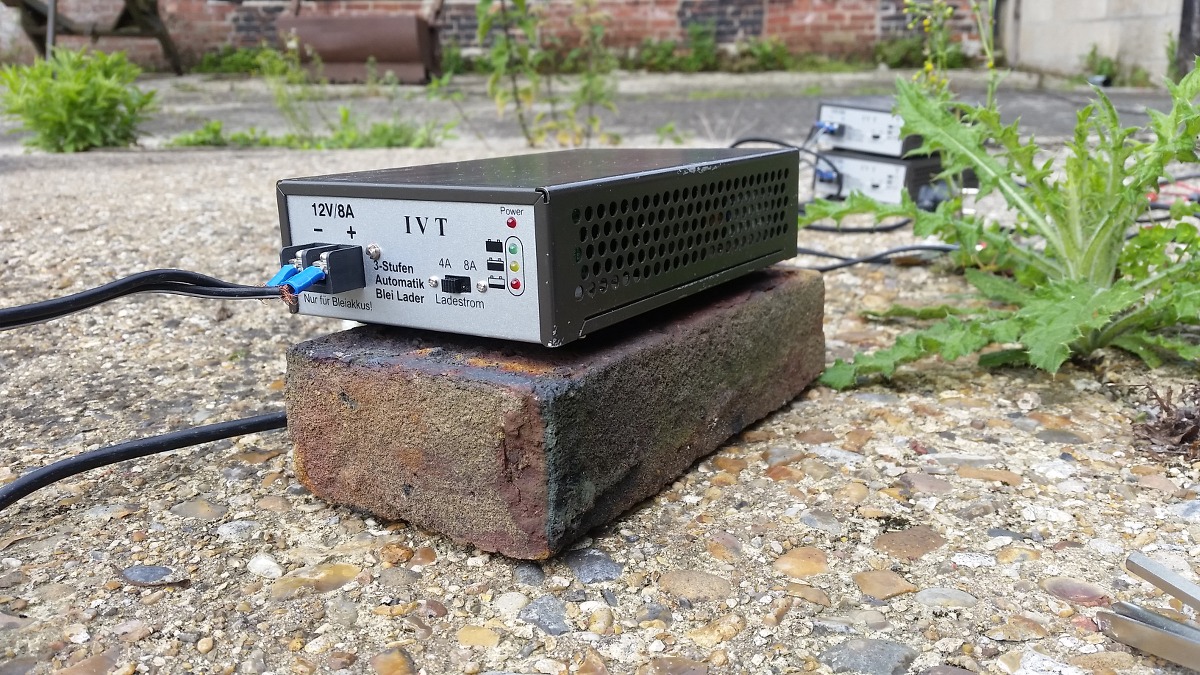
V3: IVT intelligent battery charger for trickle or fast charging 12V batteries for sonic Bikes V1 & 2
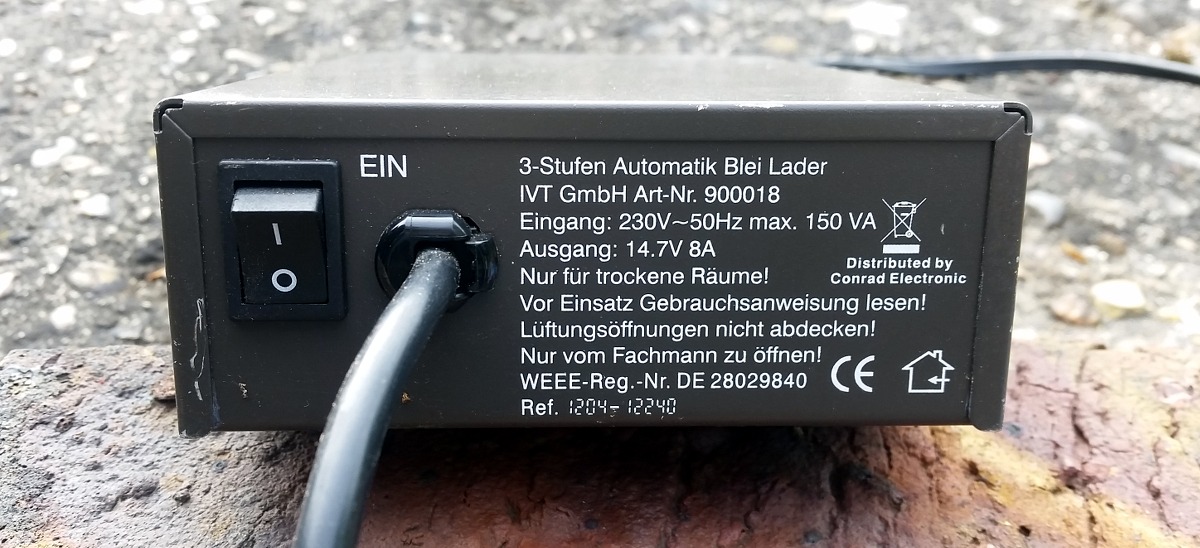
We used to use: LiPo Turnigy 2.2A 3 Cell, 11.1V, 1 per bike Maintains charge around 3-4 hours. 1 LiPo battery charger required, eg. Overlander RC6-VSP, 80W/7A. Read all literature and understand your Lipo battery. If mishandled, they can explode.
V1 and V2 : 12v 7AH SLA lead acid battery,(often used for motorbikes), 1 per bike Intelligent 12V trickle+fast charger required. 1 per 2 bikes.
We have tried solar powered trickle chargers to maintain battery charge, so far with only detrimental consequenves to computers/PS.
Long term we’re interested to develop a robust system to power the sonic bike through cycling.
Sound system
V3(current): 2 x self powered bluetooth/cable minirig speakers and sub woofer, per bike.
V2: when we can find them, 1 x pair Tangent EVO E4 speakers per bike (No longer made. Ideal speaker size is 4.9 x 7.5 x 6.3″/ 125 x 190 x 160 mm to fit on the bar design, under the handlebars leaving enough space for knees. Horribly difficult to find. Any leads, please let us know. The solution to this situation is the minirigs)
V1: 1 x pair Tangent EVO E4 speakers per bike.
Speaker frequency range of 70 – 20,000 Hz is required. The extra 10Hz at the bottom essential.
Long term, transducers and bass boxes are to be explored within bike design.
Sensors
Sensor Hat
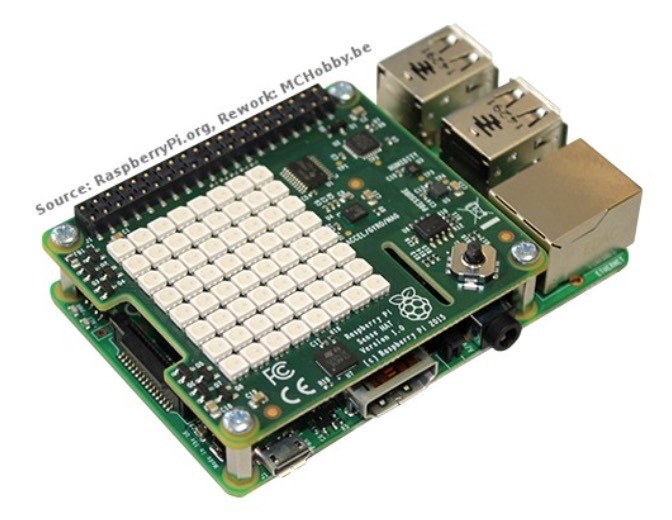
The sensor hat integrates gyroscope, accelerometer, magnetometer, temperature, barometric pressure, humidity, and an LED matrix on a board that plugs into the RPi GPIO header and sits on top of it (a so-called “hat”). There’s an on-board microcontroller that “cooks” the data from the first three sensors to provide pitch, roll & yaw signals. This is sometimes also called an IMU (inertial measurement unit). In other words this gives us an immediate heading, compass-style, that is way faster than waiting for GPS data to indicate a new direction. It also gives us the tilt of the bicycle, where mostly the sideway tilt is useful, e.g. when you’re going into a curve. However, the forward/backward tilt is available too, e.g. when you’re doing a wheelie.
Visit purchase website
Cross bar for speakers
All versions of bikes so far have been based on this design, with changes in dimensions occurring due to particularities of individual bikes.
Using a steel bar cut to size and attach to the bike in the following way.
*Make sure the speakers are angled to the face of the rider so as to immerse them in the sound, and that the tweeter of the speaker is on the RHS.
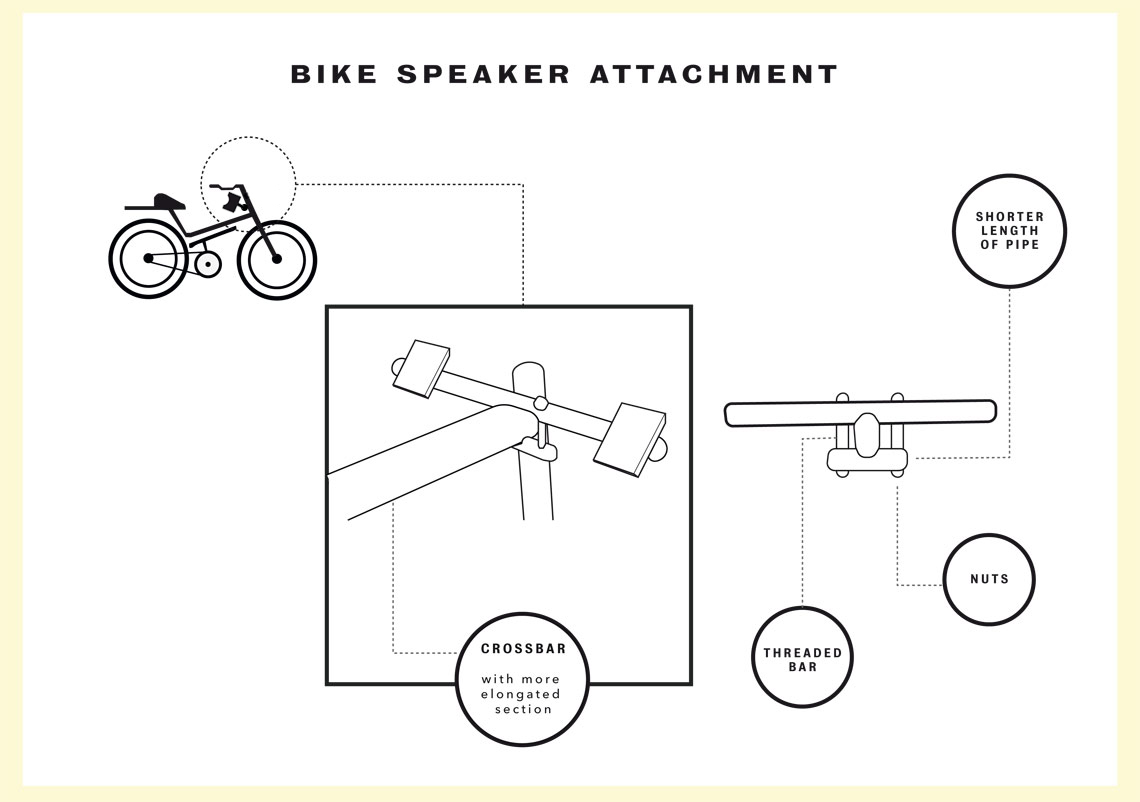
Speaker bar V.3:
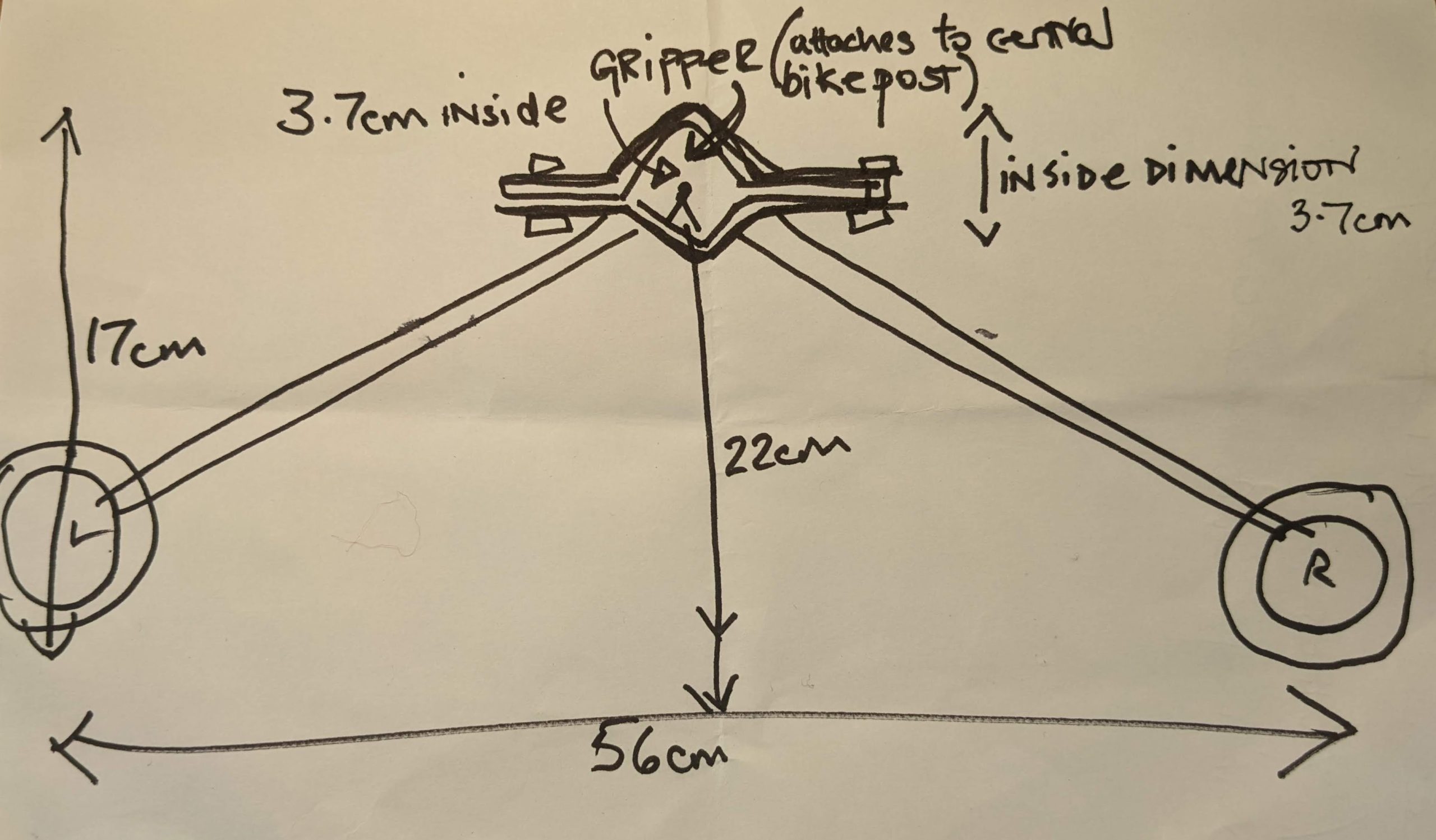
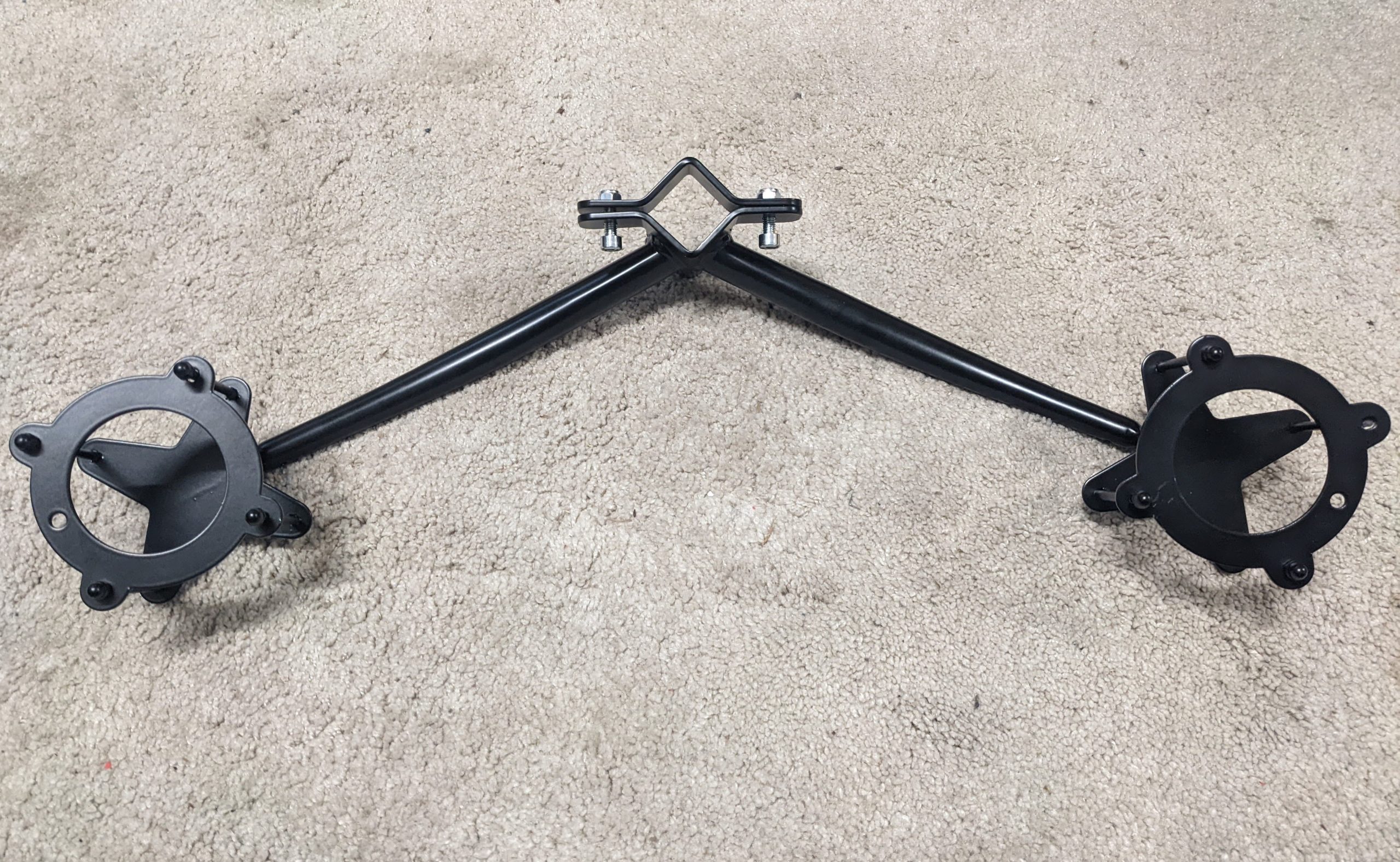
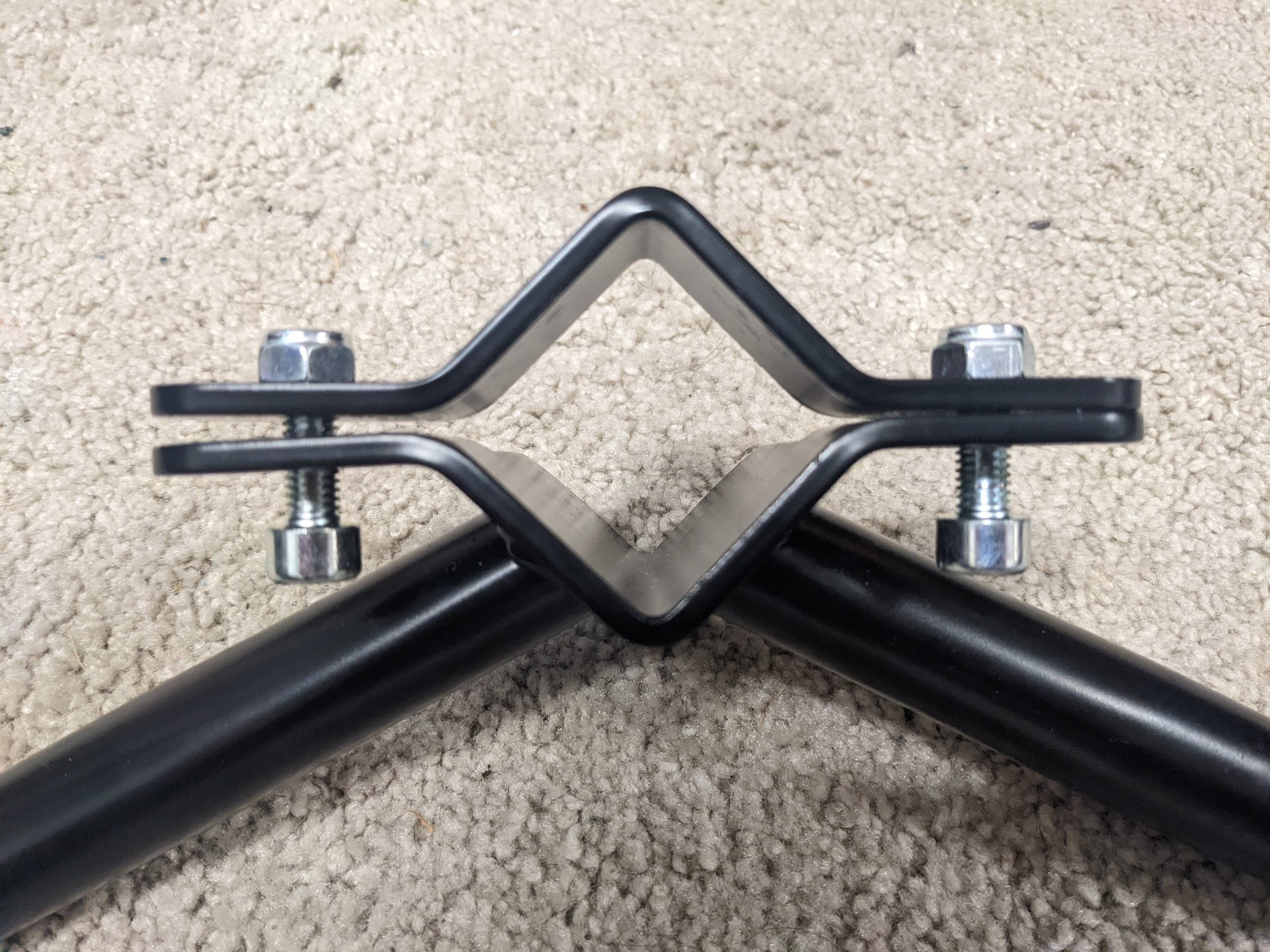
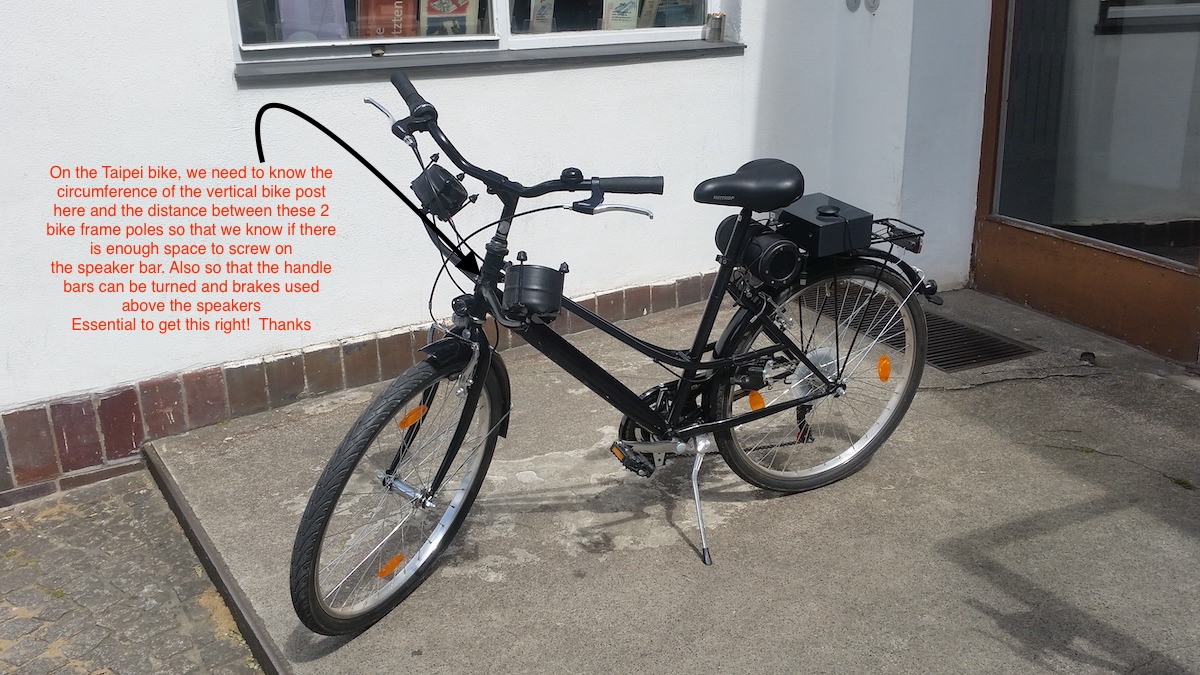
Speaker bar V.1:
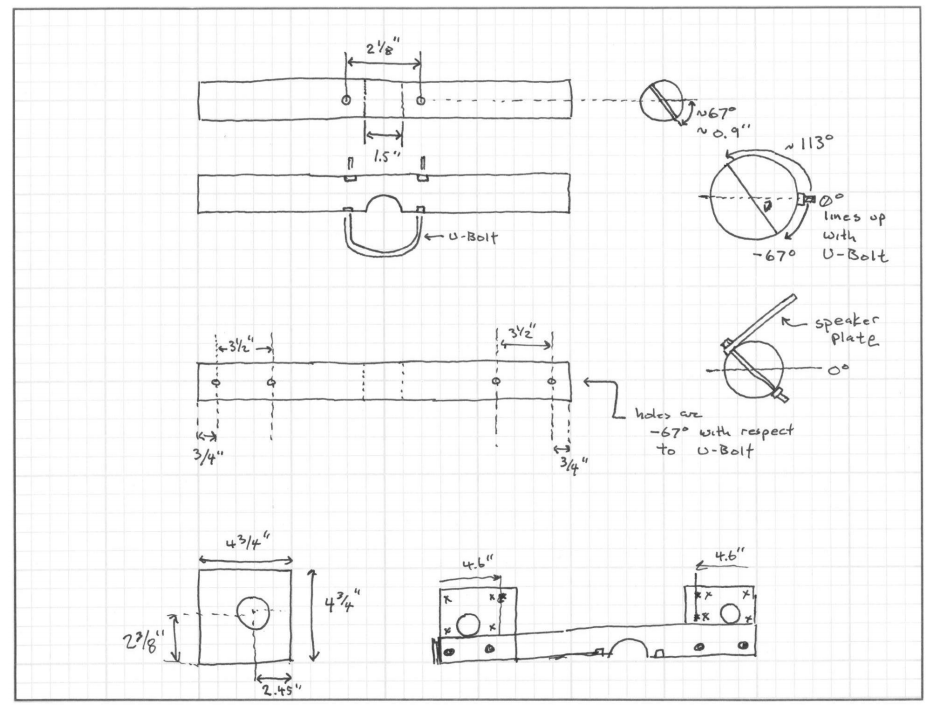
Here is a guide for the angle of the speakers:
Kit box
We’re using a number of different kit boxes on different bikes.
Sonic Bike V4 (current)
Sonic Bike V3
Sonic Bike V2
Using an 8 in. x 4 inch Junction Boxes from Home Depot http://www.homedepot.com/p/Carlon-8-in-x-4-in-Junction-Box-E989N-CAR/100404099 This box has tabs on the sides so that you can screw them onto the bike rack. Super easy to fit therefore. Sprayed black.
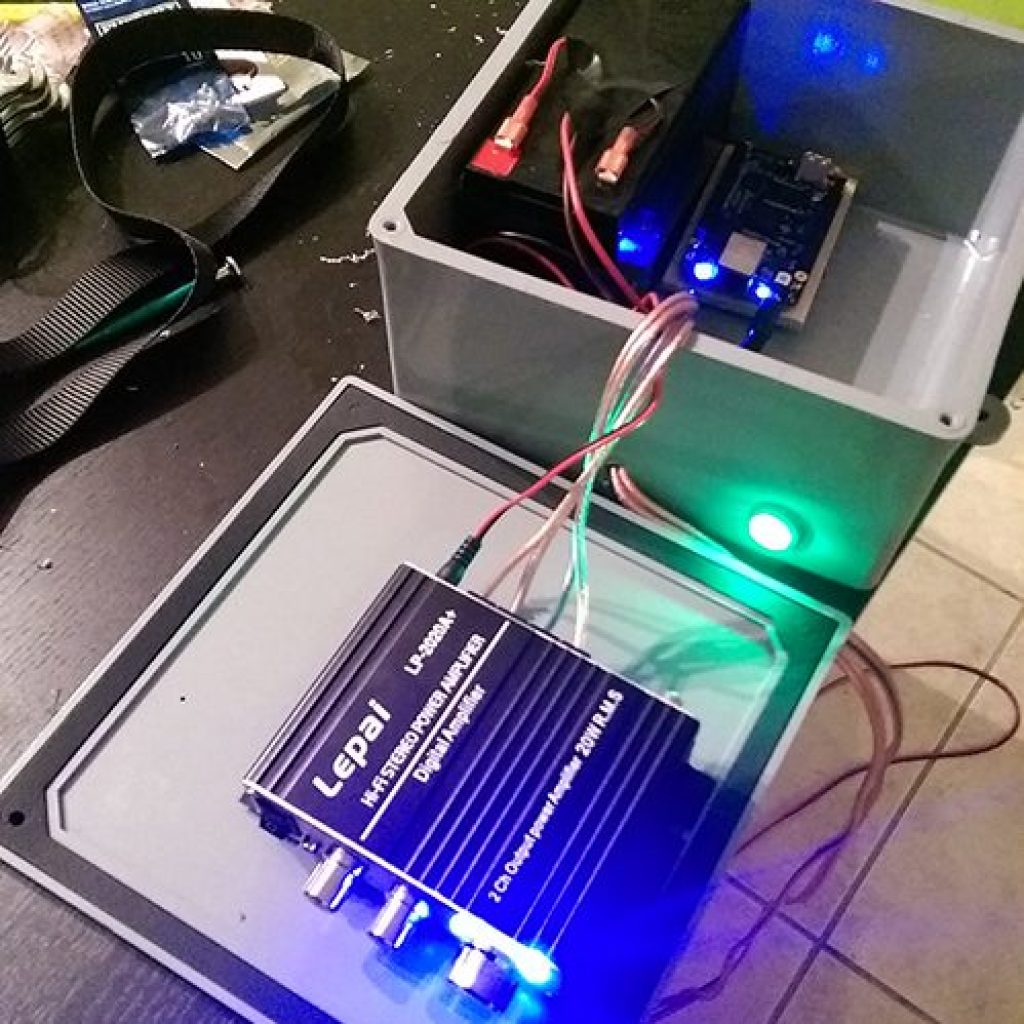
Sonic Trike
Using a plastic kit box from Maplin (with translucent lid) http://www.maplin.co.uk/c/components/project-boxes/plastic-boxes
Mapping Software
sonic-bikes mapper softwares
The current sonic bike uses the sonic-bikes mapper software, a development of sonicmappergizmo software.
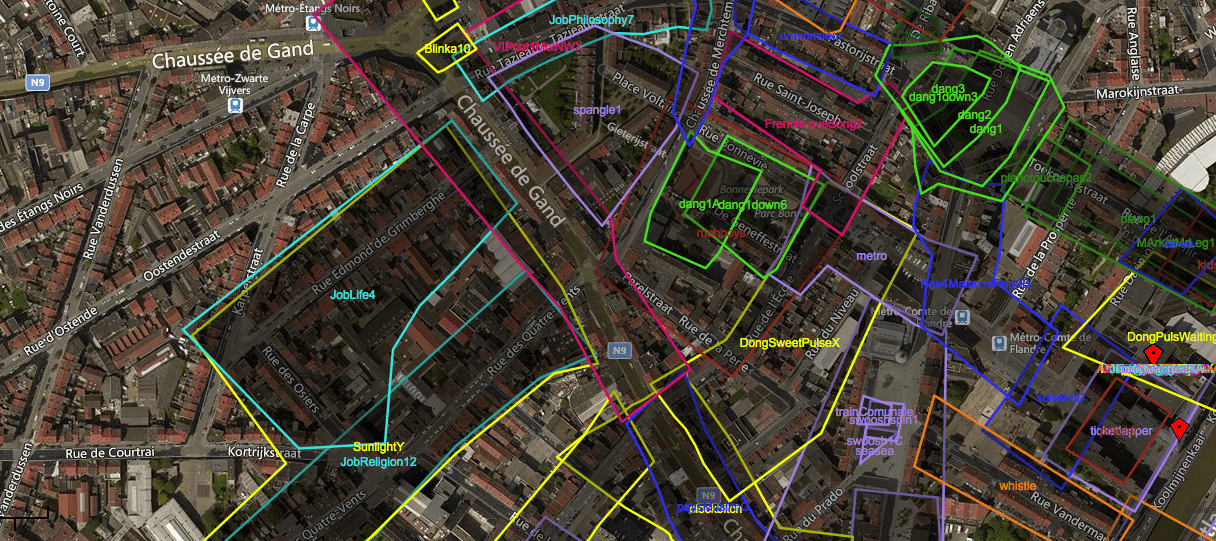
This is an online mapping tool and user interface between locations and the sonic bikes, enabling the artist behind that project to draw precise zones of any size, attaching a sound file with specific playback requirements to each one. When a sonic bike is ridden into that zone, that sound file will play. This sound map is the score.
Sample parameters can be added to each zone to control how the sound plays (more below) and this version of the mapper tool allows multiple users to make sonic bike maps, at the same time, rather that just one map (more below).
This version of the mapper made was made by Francesca Sargent in 2015. It builds on the old sonicmappergizmo mapping tool that was initiated by Peter Edwards with Kaffe Matthews for The Marvelo Project in 2008 , who developed it for The swamp that was… in 2012. sonicmappergizmo was then redesigned for Opera fiXi in 2013 by Dave Griffiths and used for further projects until 2015 when Francesca created the new mapper tool sonic-bikes mapper to enable multiple compositions to be made for the same area at the same time.
Sample Parameters
The normal action when a bike enters a zone is to start playing the sample associated with it. The sample is stopped when it either a) it runs out or b) the cyclist leaves the zone. On leaving the zone, the sample is faded out gradually.
The following parameters, which can be used in combination, will change this behaviour creating further compositional possibilities.
Loop
This parameter causes the sample to loop, until the cyclist leaves the zone.
One shot
This causes the sound to play all the way through, regardless of where the cyclist is. This is also useful for areas where GPS signal is noisy.
Loop and One Shot cannot be used together, or the sound will play forever…
Ghost
A ghost zone contains two polygons which are slowly blended between over time. This has the effect of sounds moving around the space. This parameter was created for The swamp that was… in 2012 by Dave and Kaffe so as to plot sounds that would eerily travel from one point another, only heard when the bike rode through the sound ghost itself – ideal for this project that was listening to sounds of the past.
Directional
This parameter controls when the sound is played according to the direction that the bike is being ridden – north, south, east, west. Created for Opera fiXi in 2013 by Kaffe and Dave , a riverside cycling route that needed a sound journey heard when riding up the river and a different one for riding down the river.
Pitch Change
The pitch of the track will be changed, wobbling the sound of the track up and down dependant on the direction ridden. Tom and Kaffe added this parameters for Finding Song Home in 2015.
Random Folders
Instead of assigning one track to a zone, the Random Folder lets you assign a whole folder of tracks to a zone – these will be selected at random and played when the zone is activated. This means that each time the cyclist rides through this zone they will hear a different sound. Tom and Kaffe added this parameters for Finding Song Home in 2015 and it is an ideal compositional tool for for small spaces like the square in The Coventry Pedalling Games 2015.
Multi Mapper function
sonic-bikes mapper enables independent and multiple compositions to be mapped for the same area at the same time. No longer simply a live system for one map, multiple users can save, edit and upload their maps now. This was created for The Summer Pedalling Games in 2015 so that we could welcome 9 new artists to create 9 separate sound works in the same park.
Notes
Updating the map tool for a new map requires fiddling about with the php – this is so we filter out zones and can keep all globally stored on the one map, needs GUI foo:
1. Get the id of the new parent zone for the current performance from here (ask dave for an account!): http://sonicmapper.borrowed-scenery.com/phpmyadmin
2. Add the title of the parent zone to the list here, in order to tell it where to pick up the colours from: application/helpers/map.php Search for “dave hack”:
3. Filter only current map zones by replacing existing id here: application/helpers/reports.php Search for “dave hack”:
4. Fix this sillyness! 🙂
System Software
sonicbike Software
The sonic bikes use sonicbike software system, a development by Tom Keene on the original swamp software system that was made in 2008 (more below).
The sonicbike system was created in 2015 for Finding Song Home when the sonic bikes moved onto the Raspberry Pi2 platform,. This was done so as to enable more interaction possibilities in the future, that the Raspberry Pi2 is capable of running.
A fully working version of the current software can be found on github: https://github.com/sonicbikes
swamp system
Initiated by Wolfgang Hauptfliech with Kaffe Matthews in 2008 for Marvelo Project. The swamp system was the first software made for the sonic bikes, it ran on the Hive Box.
In 2012 the swamp system was redesigned and developed by Dave Griffith for The swamp that was… when the sonic bikes were swapped onto Beagleboards. It ran on Beagleboards with an adapted version of the Ångström linux distribution. The software is written in Lua and periodically polls the GPS device for location, looks up where it is on the map and triggers samples to play based on it’s previous state. The map is stored in JSON format, as exported from the map tool and contains zones, which consist of names, polygons and sample parameters. The code is available here under the GPL licence. The build & development of the original ‘swamp’ system(2012), built on a Beagleboard, is at https://gitorious.org/swamp-bikeopera
In 2013 swamp was completed for performance by Dave
In 2014 the Beagleboards were no longer being sold and so we swapped to the Beaglebone Black for 2nd ward – a bicycle opera. We continued to use the swamp system on the Beaglebone blacks.
In 2015 Tom developed the swamp system into the new sonicbike system that we currently use, in order to pave the way for future sonic bike interaction. Tom found that the Beaglebones weren’t capable of supporting new software and so the sonic bikes were swapped onto Raspberry Pi2s instead. This was done for Finding Song Home during an interaction residency at Q-02. The sonicbike system does also work on the Beaglebone black, the software repository also contains full instructions for getting up and running on a Beaglebone Black too.
Design Variations
Adult sonic bike
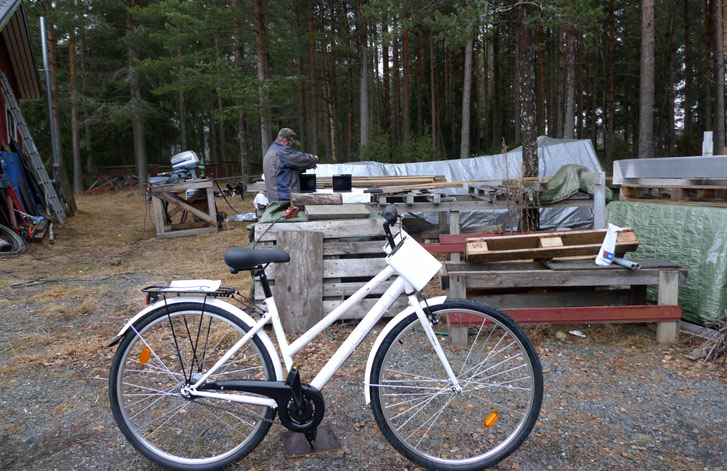
The speakers are positioned on a bar underneath the handlebars so as to immerse the rider in the sound. The kit is fitted into a box on the back rack of the bike. A sub is planned to also be fitted to the back rack of the bike.
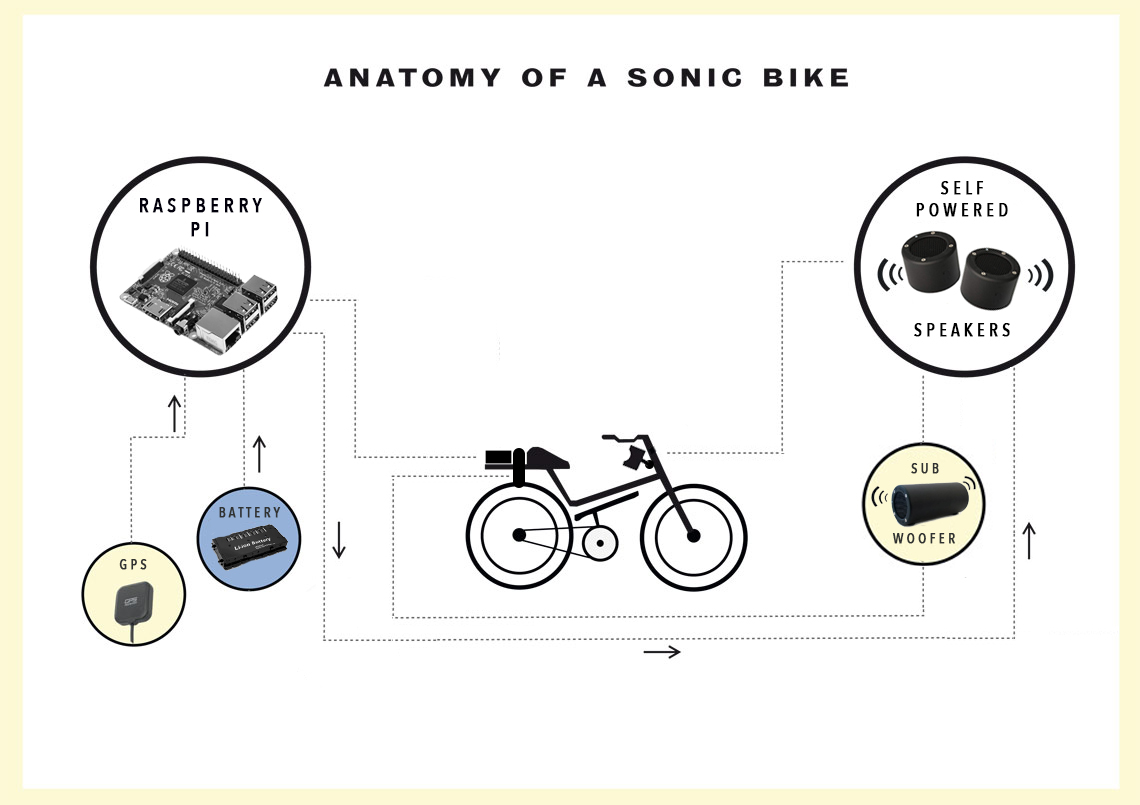
Details of all hardware including how to fit the speaker bars and kit box is in the Hardware section.
Variations
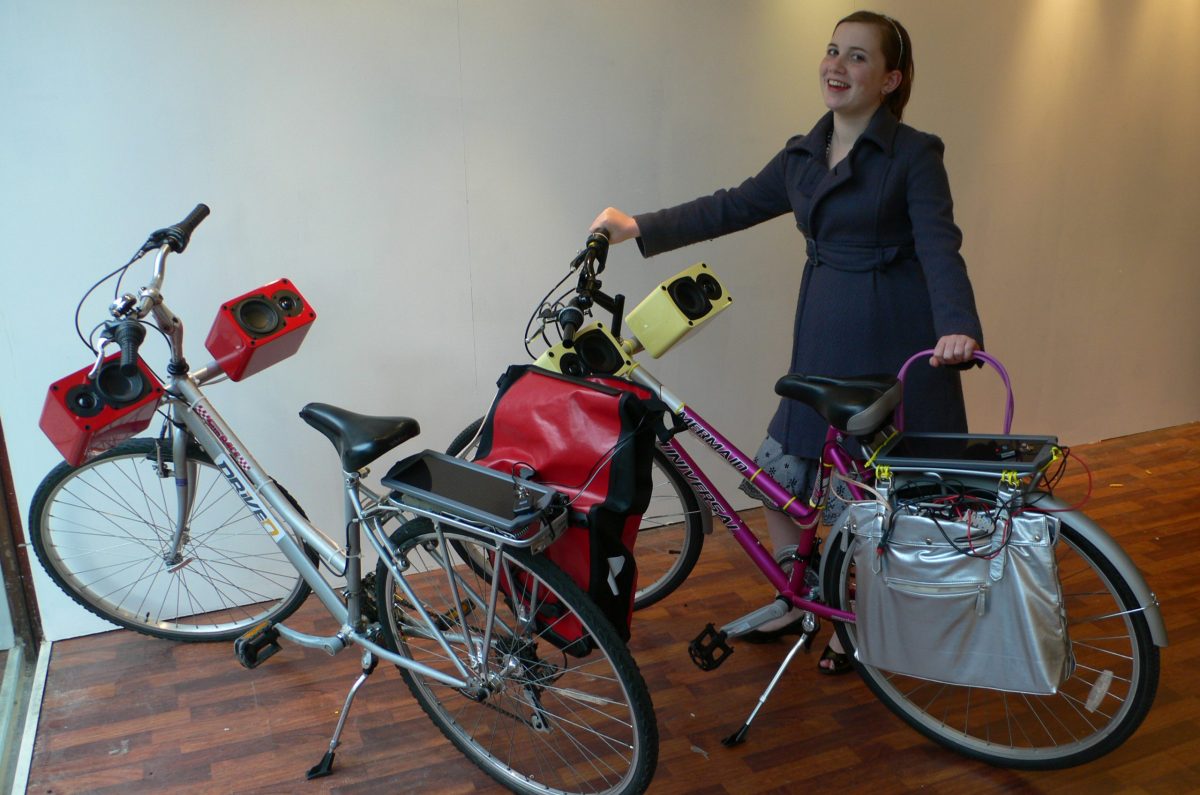
In 2008 the kit was stored in coloured handbags fitted to the back wheel of the bike. A solar panel was also attached to the back rack to trickle charge the battery while out and about. The bikes were an assortment of second hand bikes in different sizes.
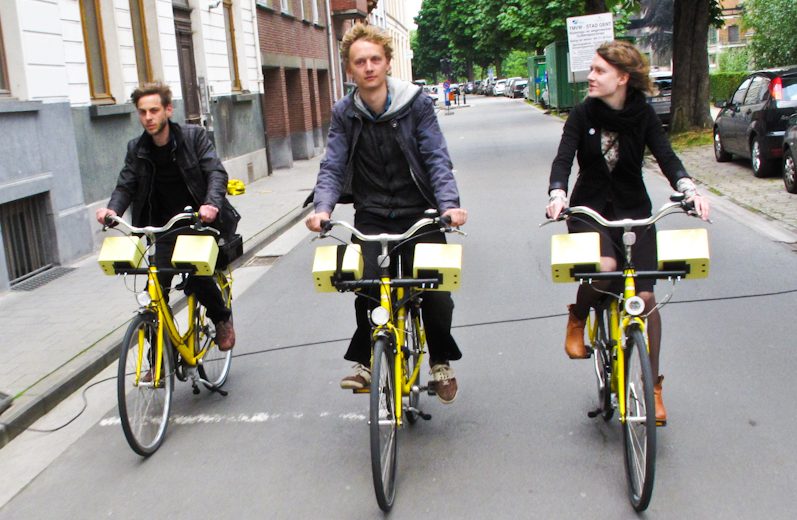
In 2012 the fleet of yellow bikes were made for The swamp that was…. This fleet of bikes had the first rear mounted kit box and didn’t use the solar panel as it was ineffective. The bikes were dutch bikes.
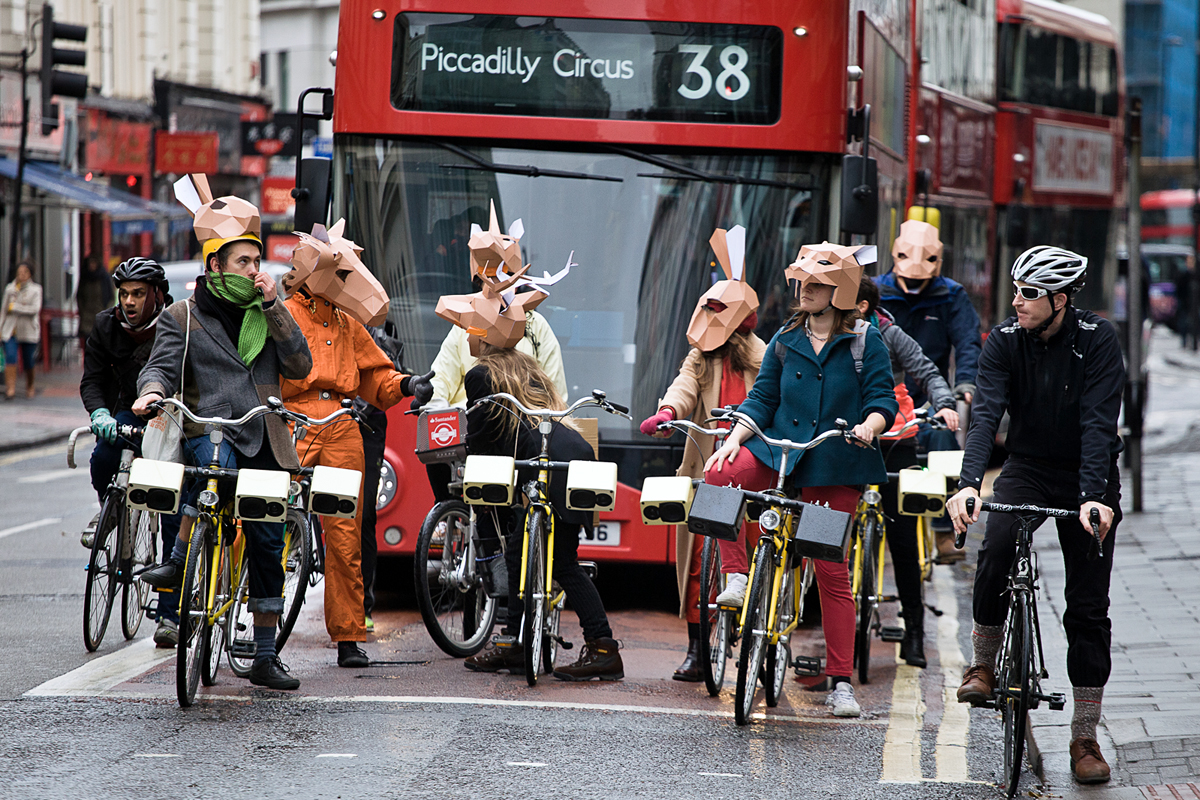
In 2015 the speakers were flipped upside down so as to face forward and play to a passing audience. The sound would reflect off the floor and when ridden in a group in the Animals March this creating a noticeable audio performance riding through the city.
Kids Bike
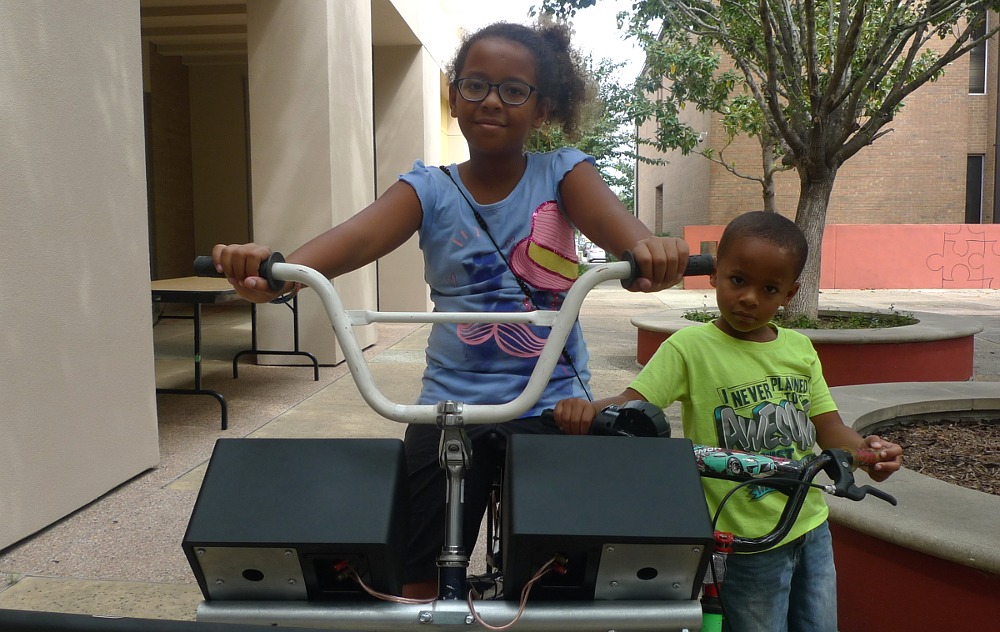
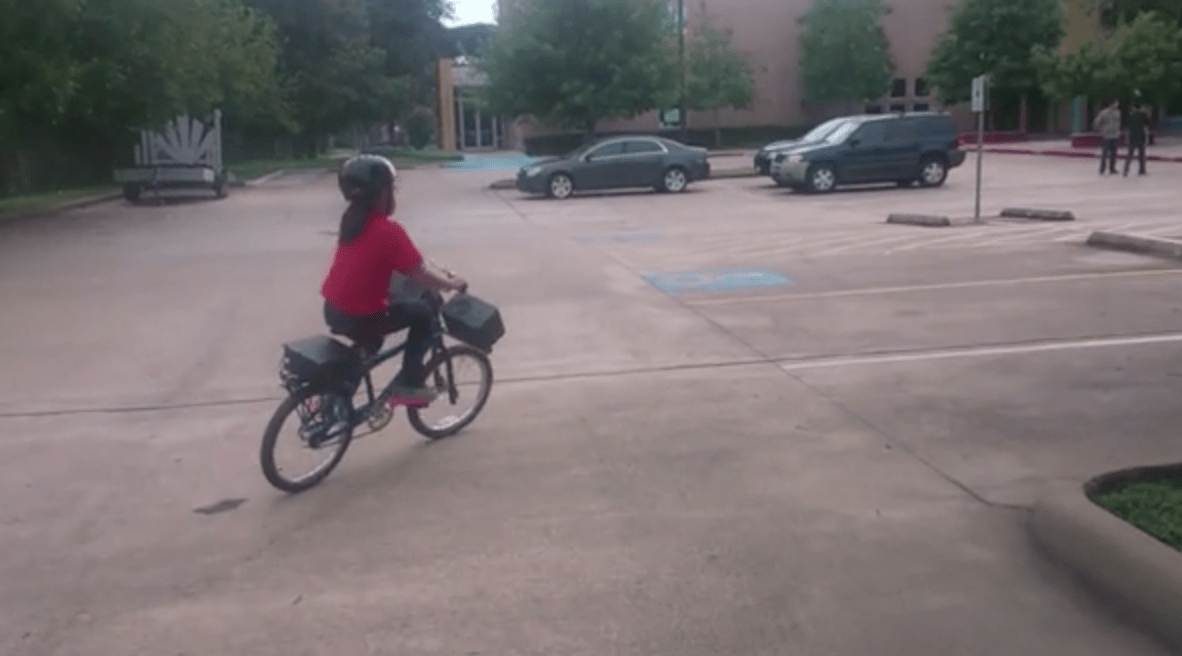
The hardware has also been developed to fit a child’s bike, this was first done in America for 2nd ward – a bicycle opera by Kaffe and Monse Lozano, making four new kids bikes. For these we used the same hardware and configuration, but the speaker bar was moved to behind the handlebars so as to leave enough space for the cyclist.
Two more kids bikes were made in Brussels for Finding Song Home by Kaffe and Ludo.
Trike
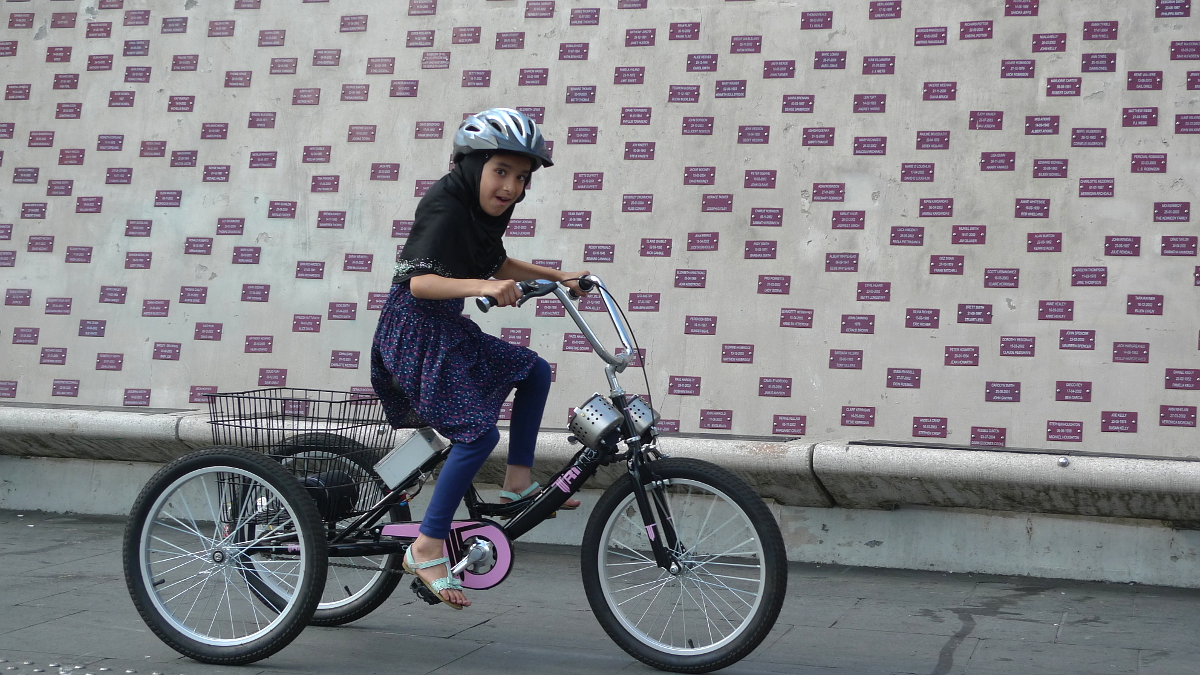
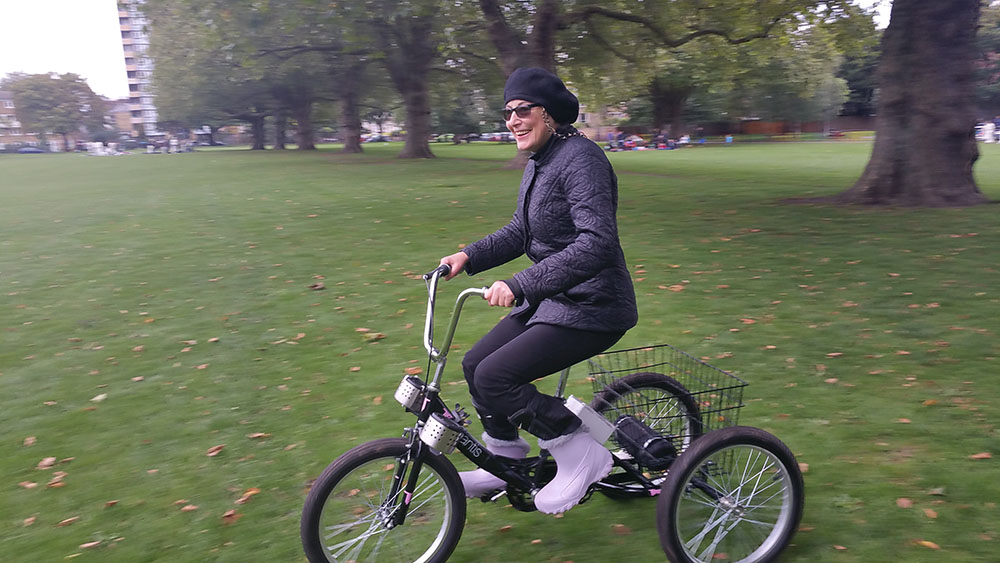
In 2015 a sonic trike was made for The Coventry Pedalling Games. The configuration of the kit was redesigned at the same time as some new items of hardware were picked – new smaller self powered Minirig speakers, the Raspberry Pi2 and a smaller 5v battery. Kaffe and Nick designed a new speaker bar and found a new much smaller kit box.
The sonic trike is the right size for both children and small adults and was used in http://sonicbikes.net/the-summer-pedalling-games/ 2015.
the Portable Kit
Following on from the trike design, the smaller kit and speaker bar enable a portable kit.
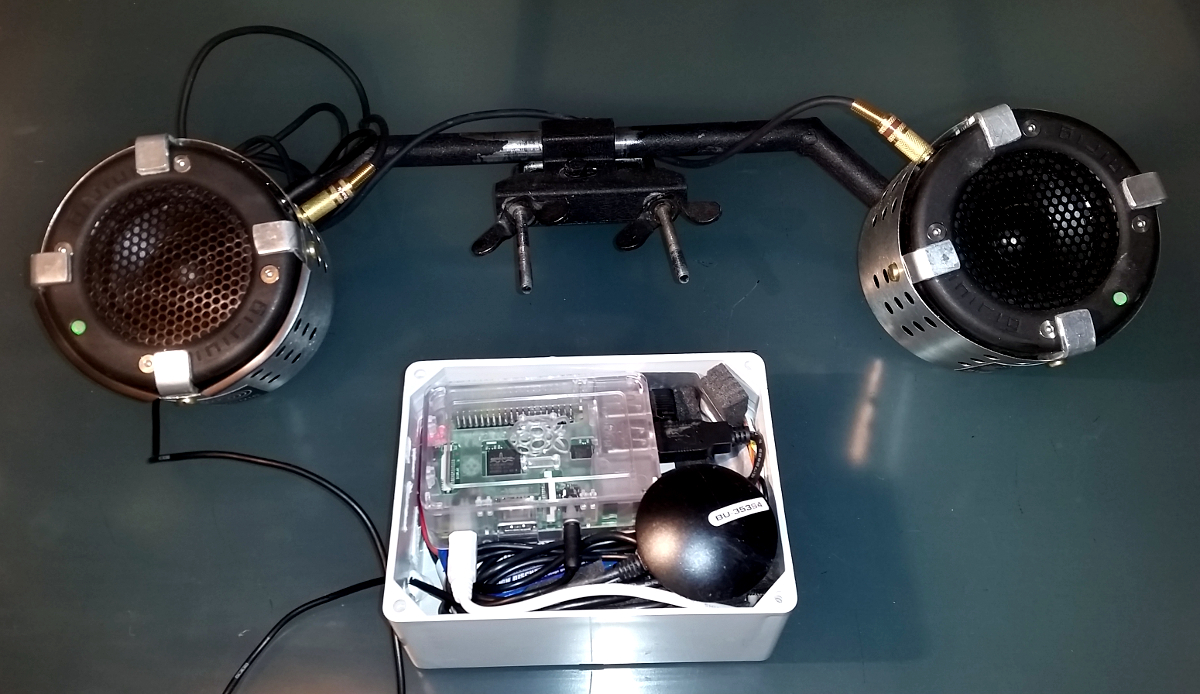
In 2015 it was attached to a tourer bike by Kaffe in 2015 with Time to Cycle: http://sonicbikes.net/category/time-to-cycle/
In 2016 it was attached to a Kayak by Kaffe, Dave and Amber: http://sonicbikes.net/category/sonic-kayaks/
The kit is travelling with Kaffe to Berlin in 2016 for her BRI professorship, and has been tested as a walking kit by Kaffe and Ray Lee: http://sonicbikes.net/category/sonic-walking/
Other Experiments
Sonic Bike Experiments
Take a look at the BRI Vimeo channel ‘Sonic Bike Experiments’ to see some tests in action: https://vimeo.com/channels/sonicbikeexperiments.
Read the Research page on the sonic bikes website and the blog for more detail on sonic bike development.
Tech
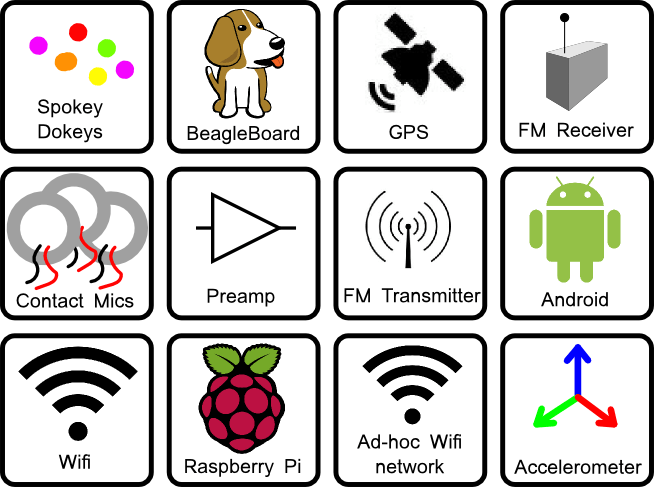
Here is some of the tech we’ve been exploring: